Smart Homes and Traditional Homes in Kerala What Is Different?
29-7-2026
The Evolution of Living Spaces: Smart Homes and Traditional Homes in Kerala
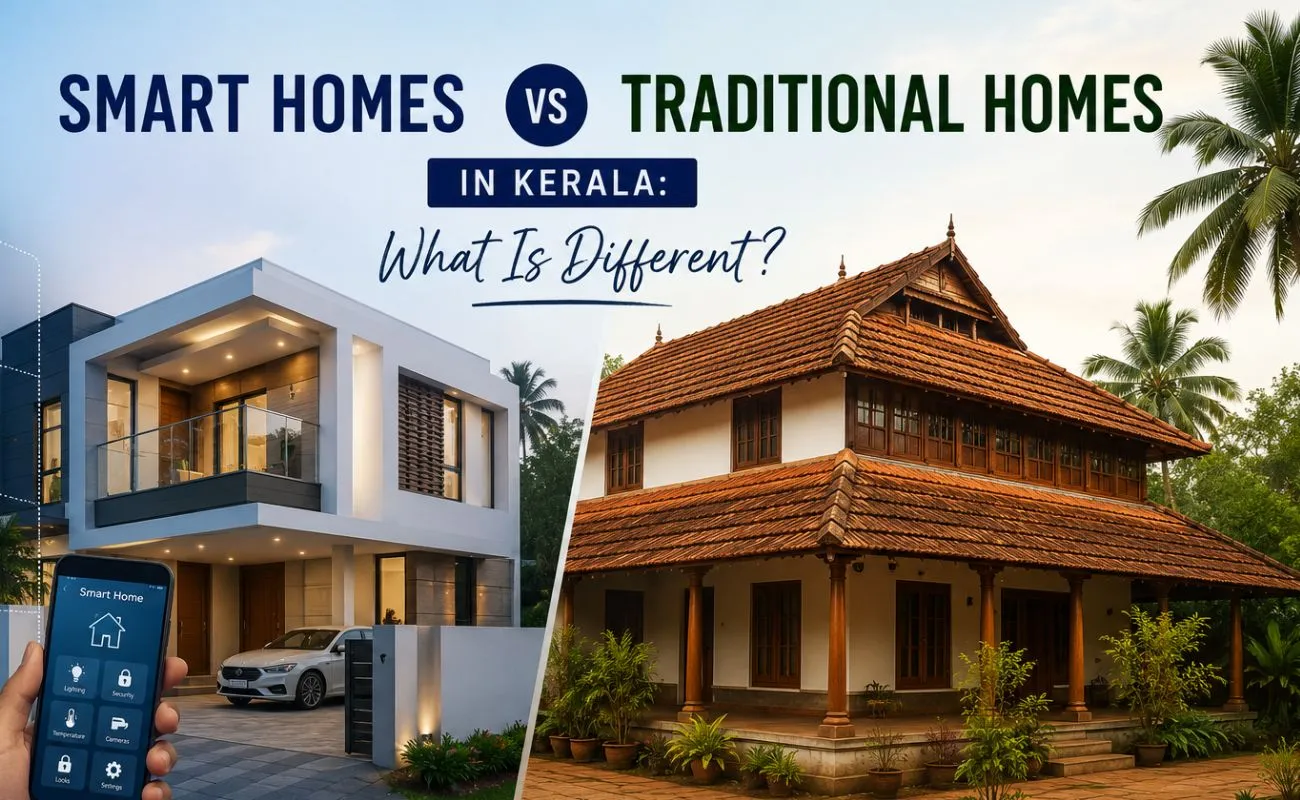
A home is no longer defined only by its walls, roof, or architectural design. For many Kerala families, a house has become a living space that responds to daily routines, improves comfort, and supports a modern way of life. This shift has introduced a new question for homeowners: should they embrace smart home technology or continue with the reliability and charm of traditional homes?
Across Kerala, homebuyers and property owners are evaluating how technology can influence everything from security and energy consumption to convenience and long-term property value. At the same time, traditional homes continue to hold strong appeal due to their practicality, cultural connection, and climate-friendly design. The growing interest in both approaches has created a unique blend of innovation and tradition within the state's residential sector.
As construction preferences continue to evolve, experienced developers such as Webuild Developers are contributing to projects that balance modern functionality with proven building principles. Understanding the differences between smart homes and traditional homes can help homeowners make informed decisions that match their lifestyle, budget, and future expectations. This insight is especially valuable for anyone planning a new project with a trusted Home Builder in Kerala.
What Are Smart Homes and Traditional Homes?
A smart home is a residence equipped with connected devices and automation systems that allow homeowners to control various functions remotely or automatically. These systems may include lighting, security cameras, door locks, appliances, climate control, and entertainment devices.
Traditional homes, on the other hand, rely on conventional electrical and mechanical systems that require manual operation. They focus more on established construction practices and architectural designs without extensive technological integration.
Key Differences Between Smart and Traditional Homes
Smart Homes:
- Automated lighting and electrical systems
- Remote monitoring through mobile applications
- Advanced security and surveillance
- Energy consumption tracking
- Voice-controlled operations
- Smart appliance integration
Traditional Homes:
- Manual operation of household systems
- Conventional security arrangements
- Lower dependence on internet connectivity
- Familiar maintenance requirements
- Simpler installation and repair processes
- Strong emphasis on traditional design elements
While both options serve homeowners effectively, the choice depends on individual lifestyle preferences, budget, and long-term goals.
Who Should Choose a Smart Home?
Smart homes are not suitable for everyone, but they offer significant benefits for specific homeowner profiles.
A smart home may be ideal for:
- Working professionals who spend significant time away from home
- Families prioritizing enhanced security
- Technology enthusiasts seeking convenience
- Homeowners interested in energy savings
- People planning long-term residential investments
- Individuals looking for future-ready housing solutions
For example, a homeowner traveling frequently can monitor security cameras, lock doors remotely, and receive instant alerts through a smartphone. This level of control provides peace of mind that traditional systems may not offer.
Why Are Smart Homes Becoming Popular in Kerala?
The popularity of smart homes in Kerala is driven by changing lifestyles, increased internet accessibility, and growing awareness of home automation technologies.
Several factors contribute to this trend:
Enhanced Security
Modern security systems allow homeowners to monitor their property in real time. Smart cameras, motion sensors, and automated locks improve safety significantly.
Energy Efficiency
Smart devices can optimize electricity consumption by automatically adjusting lighting, cooling, and appliance usage.
Convenience
Daily household tasks become easier through automation and voice-controlled systems.
Increased Property Value
Properties with smart features often attract greater interest among buyers and may command higher market value.
Remote Accessibility
Homeowners can manage various systems from virtually anywhere through mobile applications.
As technology becomes more affordable, smart homes are gradually becoming a practical choice for many Kerala families.
Where Do Smart Homes Work Best in Kerala?
Smart homes can function effectively across Kerala, but certain locations may benefit more from advanced home automation.
Urban Areas
Cities such as Kochi, Thiruvananthapuram, and Kozhikode have strong digital infrastructure, making smart home adoption easier.
Premium Villa Communities
Luxury residential projects often integrate smart technologies as standard features.
Independent Houses
Homeowners building custom residences can incorporate automation during the construction phase for better efficiency.
Emerging Residential Zones
Developing suburban areas are witnessing increasing demand for future-ready housing solutions.
The suitability of smart home technology often depends on internet availability, homeowner preferences, and project budget.
When Is It Worth Upgrading to a Smart Home?
Upgrading to a smart home can be a valuable decision under several circumstances.
During New Construction
Installing automation systems during construction is generally more cost-effective than retrofitting later.
During Renovation Projects
Major renovations provide an excellent opportunity to integrate modern technologies without extensive additional modifications.
When Reducing Energy Costs
Homeowners seeking long-term utility savings often benefit from smart energy management systems.
For Enhanced Security Needs
Families requiring advanced protection measures may find smart security systems particularly useful.
The earlier these systems are planned, the more seamlessly they can be integrated into the overall home design.
Advantages of Smart Homes
Smart homes offer several benefits that align with modern living requirements.
Greater Convenience
Many daily functions can be automated, reducing manual effort and improving comfort.
Improved Security
Features such as smart locks, surveillance cameras, and instant alerts provide enhanced protection.
Better Energy Management
Automated systems help reduce unnecessary electricity consumption.
Remote Monitoring
Homeowners can access and manage their property from virtually any location.
Future Readiness
Technology integration helps homes remain relevant as digital lifestyles continue evolving.
Key Benefits at a Glance
- Automated household operations
- Enhanced property security
- Reduced energy wastage
- Increased convenience
- Better monitoring capabilities
- Potential increase in resale value
Advantages of Traditional Homes
Despite technological advancements, traditional homes continue to offer several meaningful benefits.
Simplicity
Traditional systems are easy to understand and operate.
Lower Initial Investment
Construction costs may be lower without advanced automation features.
Easier Maintenance
Repairs and servicing often require less specialized expertise.
Cultural Connection
Many traditional Kerala homes reflect architectural heritage and regional identity.
Reduced Technology Dependence
These homes continue functioning effectively even during internet outages or technology failures.
Traditional homes remain a preferred choice for families seeking practicality and familiarity.
Challenges of Smart Homes
While smart homes offer numerous advantages, homeowners should also understand potential limitations.
Higher Initial Costs
Smart devices and automation systems can increase project expenses.
Internet Dependence
Many features require stable internet connectivity for optimal performance.
Maintenance Requirements
Advanced systems may occasionally require software updates or specialized servicing.
Device Compatibility Issues
Different brands and platforms may not always integrate seamlessly.
Cybersecurity Considerations
Connected devices require proper security measures to prevent unauthorized access.
Careful planning and professional installation can help minimize these challenges.
Cost Comparison in Kerala
Cost remains one of the most important factors when choosing between smart and traditional homes.
Traditional homes generally have lower upfront construction costs because they rely on standard electrical and mechanical systems. Smart homes involve additional investment for automation devices, sensors, networking infrastructure, and control systems.
Smart Home Cost Factors
- Smart lighting systems
- Security and surveillance equipment
- Automated climate control
- Smart appliances
- Home networking infrastructure
Traditional Home Cost Factors
- Standard electrical systems
- Conventional security solutions
- Basic appliances
- Lower installation complexity
Although smart homes may require greater initial investment, homeowners often recover part of these costs through energy savings, enhanced security, and improved property value over time.
Which Home Is Better for Kerala's Climate?
Kerala's tropical climate presents unique construction considerations, including heavy rainfall, humidity, and high temperatures.
Smart Homes and Kerala's Climate
Smart systems can improve climate management by:
- Optimizing cooling efficiency
- Monitoring indoor conditions
- Managing energy consumption
- Automating ventilation systems
Traditional Homes and Kerala's Climate
Traditional Kerala architecture has evolved specifically to address local environmental conditions.
Common features include:
- Sloped roofs for rainwater management
- Natural ventilation
- Shaded verandas
- Climate-responsive layouts
The ideal solution often combines the strengths of both approaches, traditional climate-responsive design enhanced by modern smart technologies.
A knowledgeable Home Builder in Kerala can help homeowners achieve this balance effectively.
Smart Home Trends in Kerala
The smart home market in Kerala continues to evolve with innovations and consumer preferences.
AI-Powered Automation
Artificial intelligence is enabling homes to learn user behavior and automate functions accordingly.
Voice-Controlled Systems
Voice assistants are becoming increasingly common in residential properties.
Smart Security Solutions
Integrated security platforms provide real-time monitoring and instant notifications.
Solar Integration
Many homeowners are combining smart technologies with renewable energy systems.
Energy Monitoring
Advanced systems help residents track and optimize electricity usage.
Sustainable Smart Living
Eco-friendly technologies are becoming a major focus in modern home construction.
These trends indicate that smart living will continue expanding across Kerala's residential sector in the coming years.
Frequently Asked Questions (FAQs) Are smart homes expensive to build in Kerala?
Smart homes generally require a higher initial investment due to automation systems and connected devices, but they can offer long-term savings through improved energy efficiency.
Can traditional homes be converted into smart homes?
Yes. Existing homes can be upgraded with smart lighting, security systems, automated appliances, and other smart technologies.
Which is better for Kerala's climate: smart homes or traditional homes?
Both can perform well when designed properly. Combining traditional climate-responsive architecture with smart technologies often provides the best results.
Do smart homes require constant internet connectivity?
Many smart features work best with internet access, although some systems can continue operating locally during temporary connectivity interruptions.
How can I choose the right Home Builder in Kerala for a smart home project?
Look for builders with experience in both modern construction practices and smart technology integration, along with a strong reputation for quality, transparency, and customer satisfaction.
Conclusion
Both smart homes and traditional homes offer distinct advantages. Smart homes provide convenience, automation, security, and energy efficiency, while traditional homes deliver simplicity, cultural relevance, and lower technology dependence. The right choice depends on your lifestyle, budget, plans, and personal preferences.
For homeowners in Kerala, the most effective approach is often a thoughtful blend of traditional architectural wisdom and modern technological innovation. As housing requirements continue to evolve, experienced residential developers and construction professionals are helping families create homes that are both practical and future-ready.
Organizations such as Webuild Developers contribute to this transformation by supporting quality-focused residential construction that adapts to changing homeowner expectations while respecting Kerala's unique environmental and lifestyle requirements.
If you are exploring modern housing possibilities, partnering with an experienced Home Builder in Kerala can help you create a home that combines comfort, efficiency, durability, and long-term value.