Commercial Building Approval Process in India: A Complete Roadmap
5-8-2026
Commercial Building Approval Process in India: A Complete Roadmap for Businesses and Developers
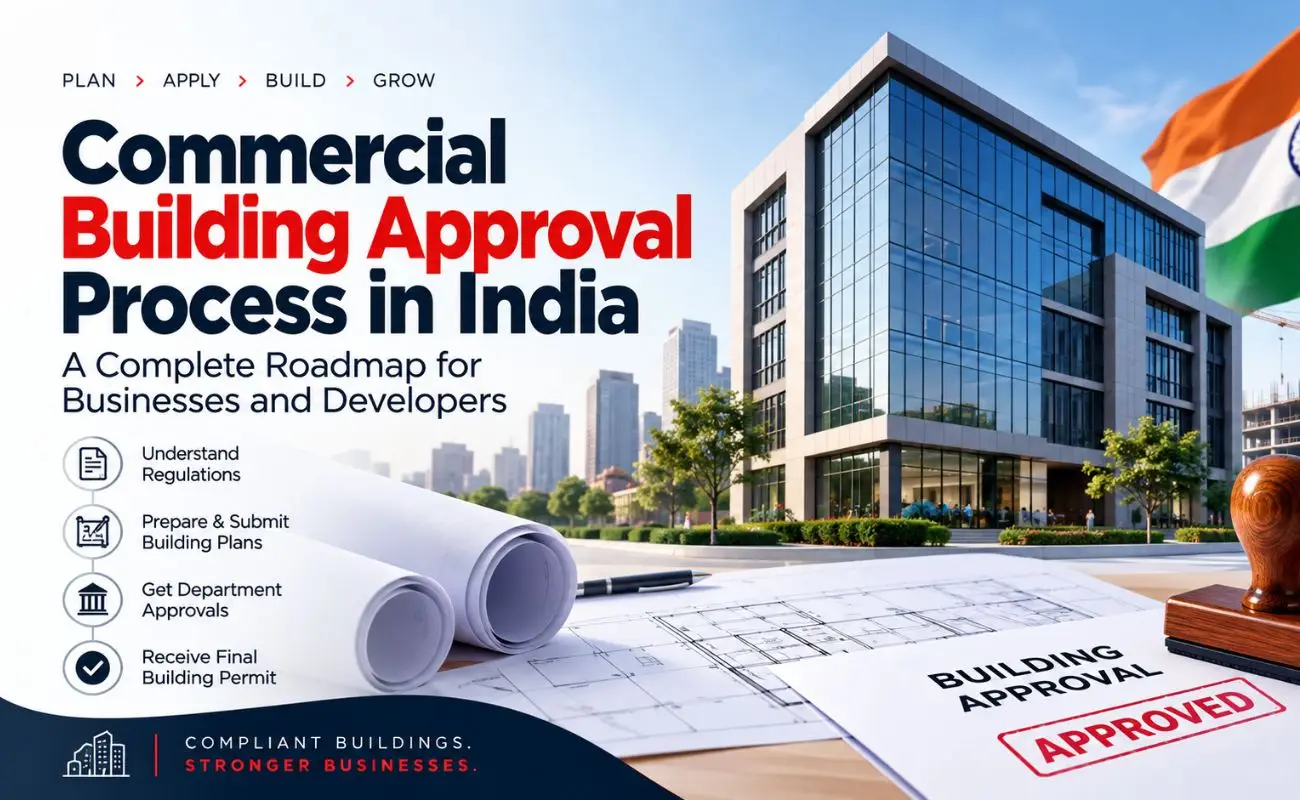
Every successful commercial building begins long before excavation equipment arrives on site. The real foundation of a commercial project is regulatory approval. Whether it is a retail complex, office tower, warehouse, shopping center, or mixed-use development, obtaining the necessary permissions determines how smoothly the project progresses from concept to completion.
India's commercial construction sector continues to expand alongside urban development, industrial growth, and infrastructure investments. However, commercial projects are governed by multiple regulations designed to ensure safety, sustainability, and orderly urban expansion. For this reason, experienced Builders in India devote considerable effort to understanding the approval procedures before construction begins.
Across the country, professionally managed development firms such as Webuild Developers recognize that regulatory compliance is not simply a legal obligation; it is a crucial element of project success, investor confidence, and long-term asset value.
What Is a Commercial Building Approval?
A commercial building approval is an official authorization issued by competent authorities allowing the construction of a commercial property according to approved plans and applicable regulations.
This approval verifies that the proposed structure complies with planning standards, zoning requirements, engineering norms, environmental considerations, and public safety regulations.
Commercial building approvals typically apply to:
- Office buildings
- Shopping malls
- Retail outlets
- Hotels
- Warehouses
- Industrial-commercial facilities
- Business parks
- Mixed-use developments
Without approval, a project may face legal notices, penalties, construction stoppages, or even demolition orders.
Why Government Approval Is Mandatory
Government approvals are designed to ensure that commercial developments contribute positively to urban growth while protecting public interests.
Commercial buildings accommodate large numbers of people daily. Authorities must verify that structures are safe, accessible, and compatible with surrounding infrastructure.
Key Benefits of Building Approval
- Ensures legal construction practices
- Protects public safety
- Prevents unauthorized development
- Supports planned urban expansion
- Reduces environmental risks
- Facilitates utility connections
- Enhances property value
- Improves financing eligibility
Approvals also provide confidence to investors, tenants, and future buyers that the development complies with statutory requirements.
Regulatory Framework Governing Commercial Construction in India
Commercial construction in India operates within a multi-layered regulatory environment. While national guidelines establish broad standards, state governments and local authorities implement region-specific rules.
The approval framework generally includes:
- National building regulations
- State building rules
- Municipal development regulations
- Environmental laws
- Fire safety requirements
- Utility authority standards
Developers must satisfy all applicable regulations before construction activities can commence.
National Building Code and Development Rules
The National Building Code (NBC) serves as a comprehensive reference for planning, design, construction, and maintenance standards across India.
The code addresses critical aspects such as:
- Structural stability
- Fire prevention systems
- Emergency exits
- Accessibility provisions
- Occupant safety
- Building services
- Sustainable development practices
Modern commercial developments are expected to meet increasingly sophisticated safety and operational standards. As a result, reputable Builders in India integrate NBC requirements into project planning from the earliest design stages rather than treating compliance as a final approval requirement.
This proactive approach minimizes redesign costs and accelerates approval timelines.
State and Municipal Authority Regulations
While national standards establish the framework, local authorities determine how commercial developments fit within regional planning objectives.
Municipal regulations commonly govern:
- Floor Area Ratio (FAR)
- Building height limits
- Setback distances
- Parking requirements
- Road access provisions
- Drainage systems
- Open space requirements
A building design that satisfies regulations in one city may require modifications in another due to local planning priorities.
Therefore, location-specific compliance assessments are essential before preparing detailed construction drawings.
Key Authorities Involved in Commercial Building Approval
Commercial projects often require interaction with several government departments and regulatory agencies.
Understanding their respective responsibilities can significantly improve approval efficiency.
Municipal Corporations and Urban Local Bodies
Municipal authorities generally serve as the primary approval agency for commercial projects.
Their responsibilities include:
- Building plan review
- Construction permit issuance
- Compliance verification
- Site inspections
- Occupancy certification
Most applications begin with municipal scrutiny before progressing through additional approval stages.
Development Authorities and Planning Agencies
Development authorities oversee broader urban planning objectives and land development strategies.
Their functions may include:
- Land use verification
- Master plan enforcement
- Infrastructure coordination
- Regional development approvals
These agencies ensure that new commercial developments align with long-term urban growth plans.
Pre-Approval Requirements
Preparation plays a significant role in avoiding delays during the approval process.
Before submitting any application, developers should verify critical legal and planning requirements.
Land Ownership Verification
Approval authorities require confirmation that the applicant possesses legitimate rights to develop the property.
Verification generally includes:
- Title deed examination
- Encumbrance verification
- Ownership history review
- Legal due diligence
- Property tax status verification
Even minor ownership discrepancies can delay approvals substantially.
Land Use and Zoning Compliance
Not every parcel of land can legally accommodate commercial construction.
Authorities evaluate whether the proposed development matches approved zoning classifications and planning objectives.
Zoning Compliance Checklist
- Confirm commercial land-use designation
- Verify development restrictions
- Review master plan provisions
- Check FAR eligibility
- Assess access road requirements
- Examine environmental constraints
Addressing zoning issues early prevents costly revisions later in the process.
Documents Required for Commercial Building Approval
Documentation serves as the foundation of every approval application.
Authorities rely on submitted records to assess compliance and technical feasibility.
Technical and Engineering Documents
Typical submissions include:
- Architectural drawings
- Site layout plans
- Structural design calculations
- Soil investigation reports
- Utility infrastructure plans
- Electrical layouts
- Plumbing drawings
- Fire safety system designs
- Environmental compliance reports
- Parking management plans
Accurate documentation significantly improves review efficiency and reduces clarification requests.
Step-by-Step Commercial Building Approval Process 1. Preparation of Building Plans
The approval journey begins with detailed planning and design development.
Professionals assess:
- Site conditions
- Access requirements
- Regulatory constraints
- Functional requirements
- Infrastructure availability
This stage converts project concepts into technically viable designs.
2. Architect and Structural Engineer Certification
Qualified professionals must certify that the proposed design satisfies applicable regulations and engineering standards.
Their certification confirms:
- Structural integrity
- Safety compliance
- Regulatory conformity
- Technical feasibility
Professional accountability strengthens the reliability of submitted plans.
3. Submission Through Online Approval Systems
Many states have adopted digital approval platforms to improve efficiency and transparency.
Applicants can:
- Upload documents electronically
- Monitor application progress
- Respond to observations
- Receive approvals online
Digital systems have substantially reduced administrative delays compared to traditional paper-based processes.
4. AutoDCR and Single Window Portals
Several jurisdictions utilize AutoDCR technology to automate scrutiny of building drawings.
Benefits of AutoDCR
- Faster plan verification
- Reduced manual errors
- Transparent review procedures
- Improved processing speed
- Standardized compliance checks
Single-window portals further streamline communication between applicants and multiple departments.
5. NOC Approvals and Technical Scrutiny
Commercial developments frequently require additional No Objection Certificates (NOCs).
Depending on project size and location, approvals may be needed from:
- Fire Department
- Pollution Control Board
- Water Authority
- Electricity Distribution Authority
- Airport Authority
- Traffic Department
- Environmental Agencies
Each NOC evaluates specific technical considerations relevant to public safety and infrastructure management.
6. Fee Payment and Permit Issuance
Once technical scrutiny is successfully completed, authorities calculate the applicable charges.
These may include:
- Building permit fees
- Development charges
- Infrastructure contributions
- Scrutiny fees
- Utility-related charges
Following payment verification, the construction permit is issued.
Only then can physical construction legally commence.
Occupancy Certificate and Post-Construction Compliance
Construction completion does not mark the end of regulatory obligations.
Authorities must verify that the finished building matches approved plans and applicable standards.
Post-Construction Requirements
- Completion certificate submission
- Final structural verification
- Fire safety inspection
- Utility compliance verification
- Occupancy certificate issuance
- Environmental compliance review
The Occupancy Certificate serves as official confirmation that the building is safe for use.
Common Reasons for Commercial Building Approval Rejection
Approval delays frequently result from avoidable mistakes.
Common issues include:
- Incomplete documentation
- Incorrect drawings
- Zoning violations
- Missing NOCs
- Structural inconsistencies
- Non-compliant parking provisions
- FAR calculation errors
- Environmental non-compliance
Even well-funded projects can experience setbacks when approval requirements are overlooked.
How to Avoid Approval Delays
Consider the following best practices:
- Conduct thorough legal due diligence
- Engage qualified professionals early
- Verify zoning requirements before design work
- Maintain document accuracy
- Track regulatory changes
- Review drawings before submission
- Coordinate with authorities proactively
Careful preparation often saves months of project delays.
Timeline, Costs, and Best Practices
Approval timelines vary depending on project size, location, and regulatory complexity.
Simple commercial projects may receive approvals relatively quickly, while large-scale developments often require extended review periods due to additional scrutiny and NOC requirements.
Factors Influencing Costs
- Project size
- Land location
- Building height
- Infrastructure demands
- Environmental requirements
- Authority fees
- Consultant charges
Recommended Best Practices
- Begin compliance planning early
- Budget for approval-related expenses
- Maintain transparent documentation
- Schedule periodic regulatory reviews
- Partner with experienced consultants and developers
A structured approval strategy contributes significantly to project success.
Expert Insights: Why Regulatory Planning Matters in Commercial Construction
Regulatory planning influences virtually every aspect of commercial development.
Early compliance assessments help organizations:
- Reduce legal exposure
- Control project costs
- Improve approval efficiency
- Enhance investor confidence
- Minimize redesign requirements
- Support long-term operational stability
Successful Builders in India understand that approvals are not administrative obstacles; they are strategic milestones that shape project outcomes.
When regulatory considerations are integrated into planning from day one, commercial developments are better positioned for timely execution and sustainable growth.
Frequently Asked Questions Is commercial building approval mandatory in India?
Yes. Commercial construction requires approval from the relevant authorities before work can begin legally.
How long does commercial building approval take?
The timeline varies depending on project size, location, and the number of required clearances.
What is AutoDCR in building approvals?
AutoDCR is a digital system that automatically checks building plans for regulatory compliance.
Can construction start before approval is granted?
No. Starting construction without approval can result in penalties, legal action, or demolition orders.
Why are NOCs required for commercial buildings?
NOCs confirm compliance with specific requirements related to fire safety, environmental protection, utilities, and public infrastructure.
What happens after construction is completed?
The building undergoes inspections and compliance verification before an Occupancy Certificate is issued.
Why should businesses work with experienced Builders in India?
Experienced developers help manage approvals, ensure compliance, reduce risks, and improve the efficiency of project execution.
Does zoning affect commercial building approval?
Yes. Authorities verify that the proposed project aligns with approved land-use and zoning regulations before approving.
Conclusion
The commercial building approval process in India involves far more than obtaining a construction permit. It is a structured framework designed to ensure legal compliance, public safety, environmental responsibility, and orderly urban development.
From land verification and zoning compliance to technical scrutiny, NOC clearances, and occupancy certification, every stage plays an important role in creating successful commercial assets. Businesses and investors who understand these requirements are better equipped to avoid delays, manage costs, and protect their investments.
Leading Builders in India consistently prioritize regulatory planning because they recognize its direct impact on project quality and long-term value. Companies such as Webuild Developers demonstrate how disciplined planning, compliance awareness, and professional project management contribute to smoother development outcomes.
Before launching any commercial construction project, seeking expert guidance and understanding the approval landscape can make the difference between a delayed project and a successful development journey.